
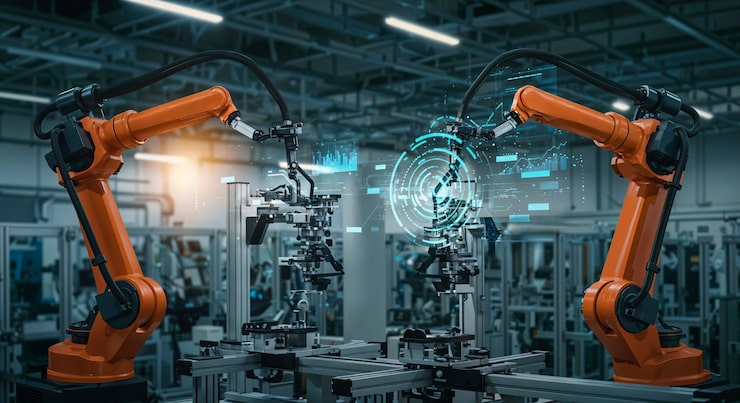
Manufacturing 4.0 is the move from connected factories to self-improving operations. Sensors, historians, and dashboards show what is happening on the shop floor. The next leap is using Generative AI to predict what is likely to happen and to recommend the best response in plain language, backed by evidence. For teams exploring gen ai training in Chennai, manufacturing is a strong domain to learn because outcomes are measurable: fewer breakdowns, better yield, and more stable delivery.
What Generative AI changes in industrial decision-making
Traditional predictive models are narrow. They forecast a single outcome, such as whether a motor will overheat. Generative AI expands the scope by combining multiple data sources and producing structured explanations and action plans. In practice, it can correlate vibration and temperature trends with production changes, review operator notes, and propose a maintenance sequence that fits the current schedule.
It also turns unstructured information into operational knowledge. Work orders, handover logs, SOPs, and quality comments hold patterns that are hard to summarise manually. A plant-tuned model can extract recurring issues, highlight deviations from standard procedures, and propose updates to checklists so the next shift learns faster.
Predictive operations: where the value starts
Predictive maintenance and spares readiness. Beyond predicting failure, Generative AI can suggest likely failure modes, recommend inspections in priority order, and propose which spares to stage based on service history and lead times.
Quality prediction and defect reasoning. Vision systems can detect defects, but they do not always explain why they occur. Generative AI can link inspection outputs to process parameters such as temperature, pressure, torque, and tool wear, then rank likely causes to speed up containment.
Throughput and energy forecasting. A Generative AI assistant can create “what-if” plans, such as optimising changeover sequences to reduce idle time, or shifting batches to avoid peak energy demand while meeting takt time.
Autonomous operations: controlled automation with guardrails
Autonomous manufacturing does not mean an AI system freely changes production settings. It means a controlled loop where recommendations are constrained by rules, safety interlocks, and approvals. A practical maturity path looks like this:
- Assist: generate insights and suggested actions; humans decide.
- Co-pilot: auto-fill tickets, inspection plans, and parameter-change requests; approvals required.
- Automate: execute low-risk actions within validated ranges and escalate exceptions.
Digital twins and simulation help validate changes before they touch production. Role-based access control limits who can approve actions, and every recommendation needs an audit trail. For engineers pursuing gen ai training in Chennai, learning “safety-by-design” is as important as learning prompts or tooling.
Data, integration, and governance that make it work
Manufacturing data is spread across PLC/SCADA, historians, MES, ERP, and quality systems. Generative AI needs a context layer to avoid confident but wrong answers. Strong programmes typically include:
- Unified context: asset hierarchy, batch/lot genealogy, and consistent timestamps.
- Edge + cloud workflow: fast signals processed at the edge; higher-level reasoning in the cloud or on-prem.
- Model orchestration: specialised models for anomaly detection and forecasting, plus a language model for explanation and planning.
- Human feedback: operators confirm outcomes and rate recommendations so the system improves.
Governance is non-negotiable: model versioning, approval records for operational changes, and clear ownership of SOP updates. Because OT environments are safety-critical, AI integrations should also follow strict cybersecurity practices such as segmentation, least-privilege access, and continuous monitoring.
How to start and how to measure success
Start with one line where downtime or scrap has an obvious cost. Define success metrics upfront: unplanned downtime, MTTR, first-pass yield, scrap rate, energy per unit, and schedule adherence. Also measure decision quality, such as time saved in troubleshooting and faster onboarding.
Skills development speeds adoption because teams must align process engineering, controls, and data. That is why many professionals look for gen ai training in Chennai that includes industrial data modelling, evaluation of false positives, and deployment patterns.
Conclusion
Generative AI can turn plant data into predictions, explanations, and safe action plans. With the right data foundation and guardrails, manufacturers can move from reactive firefighting to predictive and semi-autonomous operations. The result is higher reliability, better quality, and more consistent delivery. Done well, gen ai training in Chennai becomes directly applicable to real shop-floor improvements.