
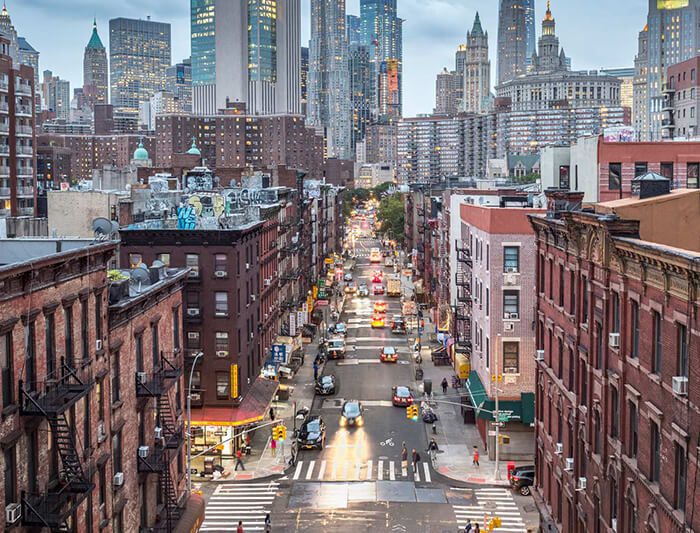
Manhattan is often introduced through a familiar collection of images: the lights of Times Square, the skyline above Central Park, yellow taxis moving through busy avenues, and the towers of the Financial District. These landmarks are part of what makes New York City memorable, but they represent only one side of Manhattan. The borough is also a collection of neighborhoods, independent businesses, historic streets, restaurants, cultural venues, and everyday places that give the city its character.
For travelers, one of the most rewarding ways to experience Manhattan is to look at the borough neighborhood by neighborhood. The atmosphere can change dramatically within a few subway stops. Midtown is fast-paced and filled with offices, hotels, theaters, and major attractions, while Greenwich Village offers narrower streets, cafés, small shops, and a more relaxed atmosphere. SoHo is known for its architecture, galleries, boutiques, and restaurants, while the Upper West Side and Upper East Side provide a different perspective on residential Manhattan.
Downtown Manhattan offers another side of the city. The Financial District combines modern skyscrapers with some of the oldest streets in New York, and the waterfront areas provide opportunities to step away from the busiest avenues. Nearby neighborhoods such as Tribeca, Chinatown, and the Lower East Side add their own history, food, architecture, and local businesses to the experience.
Food is another important part of exploring Manhattan. The borough has restaurants representing cuisines from around the world, from long-established institutions to newer independent spots. Visitors who stay only around major attractions can easily miss some of the smaller restaurants, cafés, bakeries, markets, and specialty shops that residents use every day. Exploring local businesses can turn a standard sightseeing trip into a much more personal experience.
The same is true for services and practical needs. Travelers may need everything from pharmacies and grocery stores to salons, fitness centers, transportation services, professional offices, or places to find last-minute essentials. Residents, business travelers, and people planning a longer stay can benefit from having a convenient way to discover businesses in specific parts of Manhattan rather than searching for each category separately.
For anyone researching places to visit or businesses to discover across the borough, Manhattan-Nyc offers a useful starting point for exploring local options. Instead of treating Manhattan as a single tourist destination, a local directory can help people discover businesses and places according to their interests and the neighborhood they plan to visit.
Planning by neighborhood can also make a Manhattan itinerary more efficient. Rather than crossing the city repeatedly, visitors can group attractions and local stops that are close to one another. A morning in Central Park can be combined with nearby museums and restaurants, while an afternoon downtown can include historic streets, waterfront views, shopping, and dining. This approach leaves more time for exploring and less time spent traveling between unrelated parts of the city.
Public transportation makes this kind of exploration practical. The subway connects the major sections of Manhattan, while walking remains one of the best ways to understand the scale and character of individual neighborhoods. Some streets are most interesting when experienced slowly, with time to notice architecture, storefronts, parks, public art, and the small details that do not appear in a typical tourist guide.
Manhattan is also a destination that changes throughout the day. Business districts can feel completely different in the evening, restaurant areas become more active after dark, and neighborhoods that seem quiet in the morning can become lively later in the day. This variety is one reason repeat visitors can continue finding new places even after seeing the city’s best-known landmarks.
For first-time visitors, the major attractions are an excellent introduction, but the neighborhoods are where the city becomes more distinctive. For returning travelers, exploring local businesses and lesser-known areas can provide a different experience from following the same sightseeing route each time. In both cases, having organized local information can make it easier to decide where to go next.
Whether the goal is sightseeing, dining, shopping, finding services, or simply getting to know New York more closely, Manhattan offers an enormous range of possibilities within a relatively compact area. The most memorable experiences are not always the places that appear on every postcard. Sometimes they come from a neighborhood restaurant, a small shop, a quiet street, or a local business discovered while exploring the city.
That combination of famous landmarks and everyday city life is what makes Manhattan so compelling. The borough can be approached as a checklist of attractions, but it can also be experienced as a network of neighborhoods and local businesses, each offering something different. Taking the time to explore beyond the obvious sights can make a visit more useful, varied, and memorable.